From glowing eclipses and close planetary encounters to some of the year’s best meteor showers, 2026 is a fantastic year for skywatching on the Central Coast. Many of these events are visible right from your backyard, while others shine brightest from darker skies just a short drive away.
Whether you’re a longtime member of the Central Coast Astronomical Society or simply curious about the night sky, this guide highlights the most notable astronomical events of 2026, with brief explanations and practical tips to help you know when to look, where to look, and what equipment (if any) you’ll need.
Most events listed below are visible from San Luis Obispo County and surrounding areas, weather permitting. As always, darker skies away from city lights will provide the best views.
Feb. 18–28 — Planetary Parade
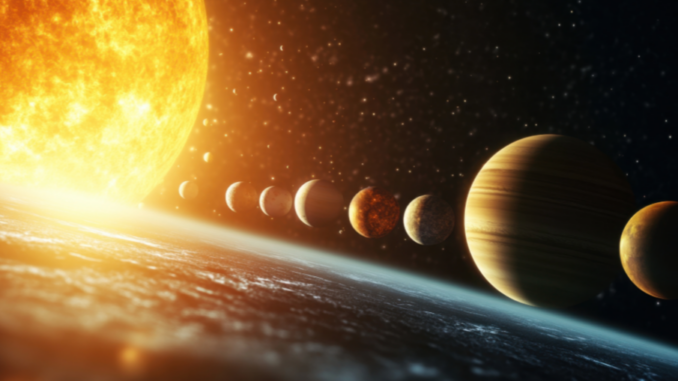
A rare lineup of six planets — Mercury, Venus, Neptune, Saturn, Uranus, and Jupiter — will appear in the sky shortly after sunset. Four are visible to the naked eye (Mercury sometimes tricky), while Uranus and Neptune need binoculars or a small telescope. Feb 22nd is the best night of the month to see this lineup (any earlier than Feb 18th and Mercury is lower and harder to see.) Try to get out there and see all six in one night between Feb 21-23!
 March 3 — Total Lunar Eclipse
A total lunar eclipse (sometimes called a “Blood Moon”) will be visible from North America (especially the West Coast) just before sunrise. This happens when Earth’s shadow fully covers the Moon, giving it a reddish hue. Look southwest for the red phase between 3:00 – 4:00 am (peaks at 3:33 am).
May 31 — Full Blue Moon
May will feature a Blue Moon — the second full Moon in a single month — making 13 full Moons in 2026. (Despite the name, the Moon won’t actually appear blue.) Moonrise is 5:20am, moonset is 8:40pm.
 June 8–9 — Venus & Jupiter Conjunction
The two brightest planets in the sky — Venus and Jupiter — will lie very close together, easily visible after sunset without any optical aid. Look just after sunset, Venus does set late (around 10pm). Mercury is also up, while you’re looking at the conjunction!
Aug. 12–13 — Perseids Meteor Shower
The Perseids, one of the best annual meteor shows, peak around mid-August. With a New Moon in the sky this year, conditions should be excellent for seeing meteors streaking across the night. Also note that the new moon for August is on the peak night! (Hint: you’ll be able to see this meteor shower during the entire month of August, these are just the peak dates given.)
Dec. 13–14 — Geminids Meteor Shower
The Geminids meteor shower — known for bright “green” meteors — will put on another stunning display in mid-December. Best viewing is when the moon is not up (new moon is Dec 9th), so plan your night accordingly. (Hint: you’ll be able to see this meteor shower during the entire month of December, these are just the peak dates given.)
 Dec. 24 — Supermoon
A Supermoon on Christmas Eve will occur when the full Moon is closest to Earth in its orbit, making it appear slightly larger and brighter than usual.
How to Observe These Events (Quick Tips)
-
No telescope required: Many events — including eclipses, meteor showers, and bright planet pairings — are visible with the unaided eye.
-
Binoculars are a big upgrade: A simple pair of binoculars can reveal planets, lunar details, and star clusters with ease.
-
Check local weather & timing: Coastal clouds can roll in unexpectedly; inland or higher-elevation locations often offer clearer skies.
-
Allow time for dark adaptation: Give your eyes 20–30 minutes away from bright lights for best night vision.
-
Dress warmly: Even summer nights on the Central Coast can cool quickly after sunset.