We’ve been getting lots of questions about the upcoming Perseid meteor shower, so here’s what you need to know!
CCAS does not have an organized Perseid viewing event scheduled. Fortunately, this is one astronomical event that is actually best enjoyed with nothing more complicated than a dark sky, a comfortable chair, and your own two eyes.
The Perseids peak the night of Wednesday, August 12 into the early morning of Thursday, August 13. Even better, the peak happens during a New Moon, which means very little moonlight and excellent conditions for seeing meteors this year. You can still see Perseids for several weeks before and after Aug. 12–13. The peak just gives you the best odds of seeing the most meteors streak through the night sky!
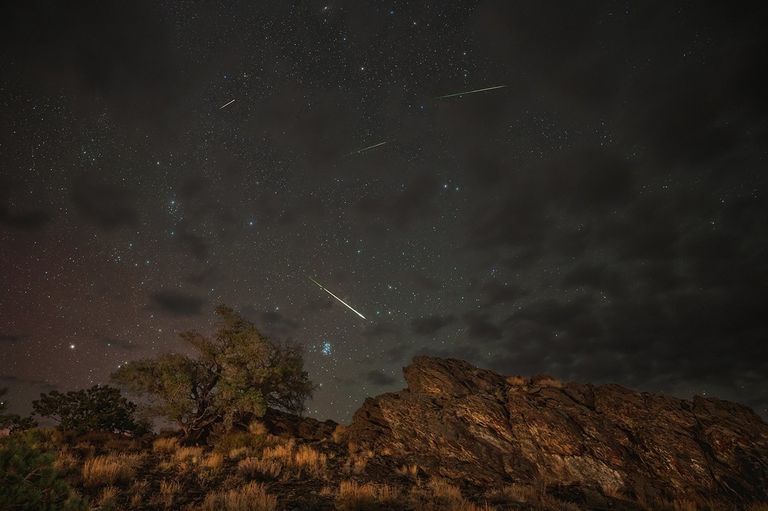
Where should I go?
You do not need a telescope or binoculars. Meteor showers are best viewed naked-eye. Find the darkest place you can with:
- A wide, open view of the sky
- As little artificial light as possible
- A safe place where you are legally allowed to be after dark
The farther you can get from bright city lights, the more meteors you are likely to see.
What time should I watch?
You can see Perseids once it gets dark, but the shower generally gets better later at night and toward the early morning hours, as the radiant in Perseus rises higher in the sky. If you don’t want to stay up until dawn, don’t worry. Go outside for an hour or two whenever you can after dark.
Where should I look?
You do not need to stare directly at the constellation Perseus! Perseus is the direction the meteors appear to come from, called the radiant, but meteors can streak across almost any part of the sky. Find a comfortable spot, lie back, and look at as much sky as possible. This part is best enjoyed with friends.
What should I bring?
A reclining chair or a cozy blanket on the ground makes a huge difference! You may want to bring with you warm layers, a chair or blanket, water or snacks, and a bit of patience. And put your phone away! It takes about 20–30 minutes for your eyes to become dark-adapted, and a bright phone screen can reset that process.
How many meteors will I see?
You may see reports saying “up to 100 meteors per hour.” That is an idealized rate under extremely dark skies with the radiant high overhead. A more realistic expectation from a good rural location during the peak is often around 30 – 50 Perseids per hour, sometimes more if conditions are excellent. They also don’t arrive evenly. You might see nothing for several minutes and then suddenly see several meteors close together.
What causes the Perseids?
Every year Earth passes through a stream of dust and debris left behind by Comet 109P/Swift-Tuttle. When those tiny particles slam into our atmosphere at tremendous speed, they heat the surrounding air and create the bright streaks we call meteors.